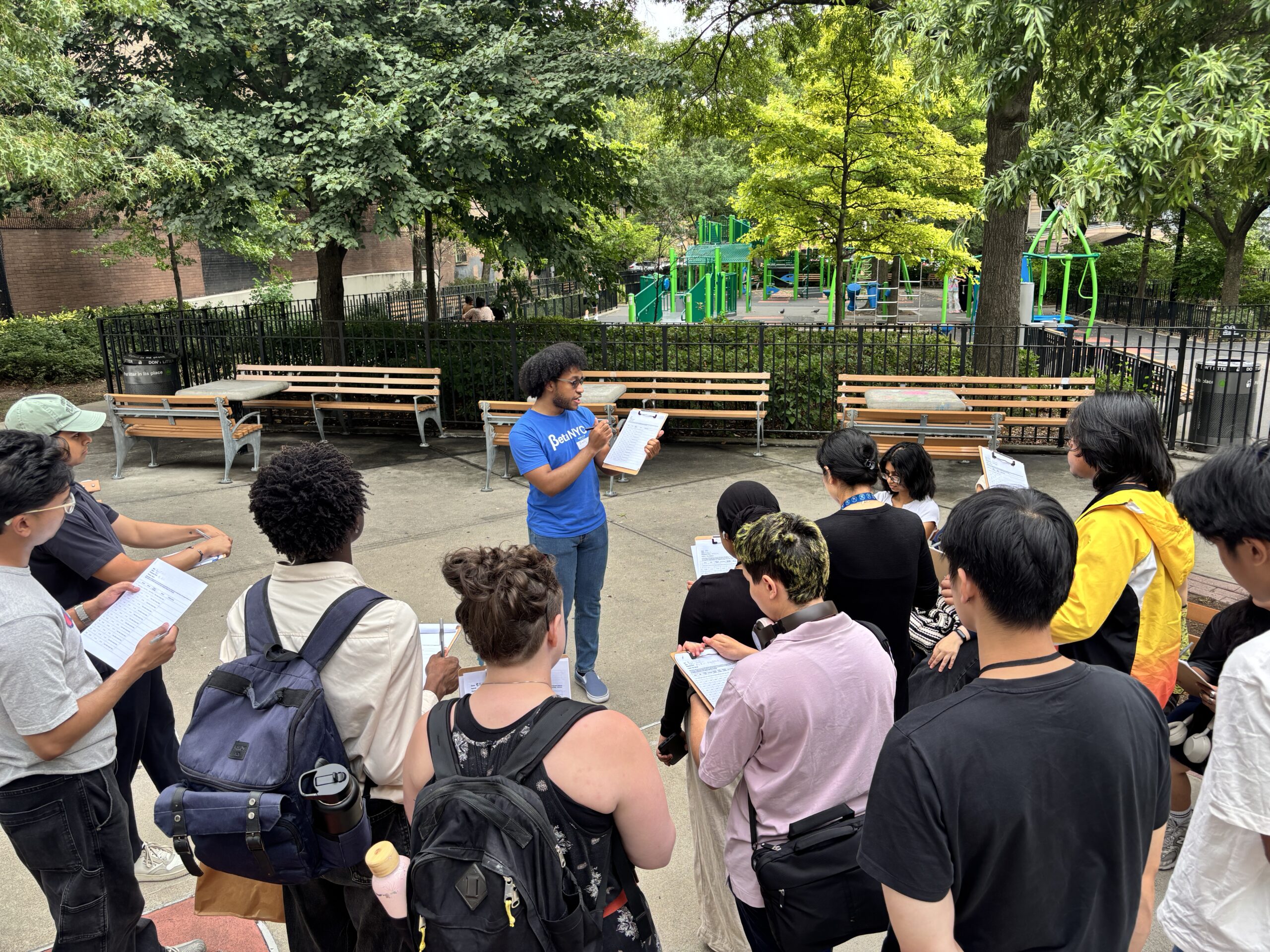
This journey started with a short, three-person meeting. Program Director of Massachusetts Institute of Technology Delta V Accelerator, Emily Young, reached out in search of executive board members to advise a team of young entrepreneurs in the early stages of launching a start-up through the Delta V program. The team in question was Ground3d, who strongly centered community support in their mission statement. This appeared closely aligned with our own centering of community engagement and inclusion at BetaNYC, which motivated Emily to speak to us.
Jazzy, my Chief-of-Staff, warmly nudged me as I expressed an interest equal parts enthused and reluctant. Reluctant, because of an all too familiar seed of doubt that asked: Am I a good enough fit for this? As a young person at the intersection of marginalized identities, it’s not an uncommon experience to question myself before entering new professional spaces. Nonetheless, I chose to trust myself. I had evolved from Civic Innovation Fellow to Manager of Educational Programs and Initiatives at BetaNYC, and who’s to say my growth couldn’t extend farther? I confirmed my participation a week later.
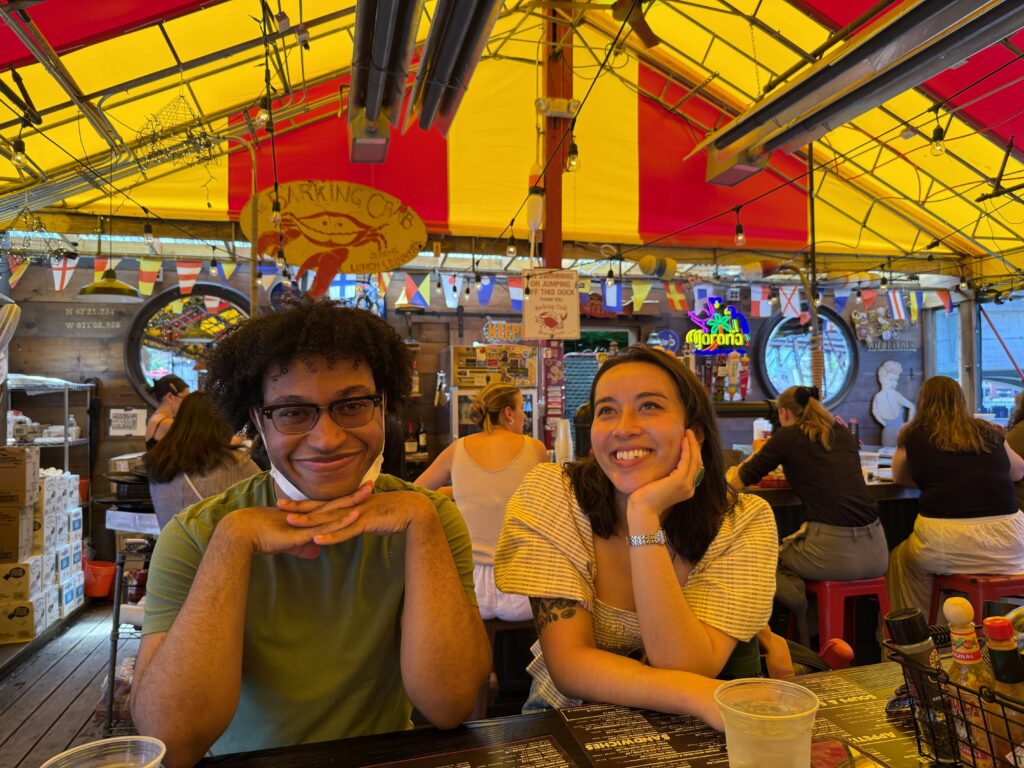
My time on the board
I would be attending a total of three board meetings, each focusing on a different aspect of launching a start-up. Meetings would commence with a presentation from the team on their approach to the theme of the day in the context of their venture, followed by time for the board to internally deliberate and organize a shared rating on the performance of the team across a set of indicators prepared for the theme, typically based on an average of the members’ individual ratings. Finally, the board would deliver their rating to the team, alongside a set of advisory remarks. Based on their rating, the team would be awarded a certain amount of funding, intended to further their progress.
This commitment, confirmed months in advance, didn’t initially feel very real. However, as time passed, emails came in, and notifications sounded off, that feeling gradually intensified. The day of the first meeting arrived. The theme was consumer, focusing on identifying a target demographic for the team’s proposed venture and building a commercial network of stakeholders. That seed of doubt had grown and blossomed into a distinct worry. Would I earn the respect of my peers? Would my contributions be valued?
After a brief moment spent exchanging greetings and reviewing pre-meeting materials, I entered the conference room reserved for the first executive board meeting and settled into my designated seat. A quick round of introductions left me equally impressed with and intimidated by the professional and personal diversity of my peers, spanning a wide range of lived experiences and professional accomplishments: from leaders of global nonprofits to recent alumni of the program still in the early stages of entrepreneurship.
I remained cautious and was among the last to speak, choosing to listen and note gaps in the thoughts shared by the wider board that I could leverage my experience in education and community work to address. Finally, I shared my thoughts to a positive reception by the board, reflected in nods and sounds of agreement. I felt relief, having been affirmed in the validity of my expertise, and resolved to be even more expressive in future meetings.
Soon after, we segued to a post-meeting rooftop mixer for executive board members and participating teams. The relaxed conversations facilitated by these mixers–there was one after each board meeting–provided the setting in which I could best take in the sheer breadth of lived experiences brought together by this program. I connected with mission-driven program managers at nonprofits that highlight underserved social groups, and was fascinated by venture-focused advisory roles that led to all parts of the world.
Many attendees came from other states; some found their callings in their collegiate years, while still others experienced dramatic post-collegiate career changes that led to new positions and new boundaries. Through these rich conversations, I felt my scope of the professional world widen considerably.
The second meeting took place a month later at Brown Rudnick in Manhattan. The theme was product, the usable item produced and promoted by the team to the public that would generate profit for the venture (such as an app or a physical tool). The board convened at a conference table on the 46th floor, facing floor-to-ceiling windows that framed an expansive view of the classic NYC skyline.
Following an intermittent meeting with the team, I arrived ready to speak to what I knew best. As a listener, however, I observed how differing professional leanings guided contrasting yet complementary angles of feedback: board members with backgrounds more rooted in the non-profit space tended to highlight issues relating to network-building and ethical community engagement, while others closer on the spectrum to the private sector pointed out issues relating to governance, profitability, and long-term sustainability. Personally, I shared insights in the spheres of community organizing and engagement.
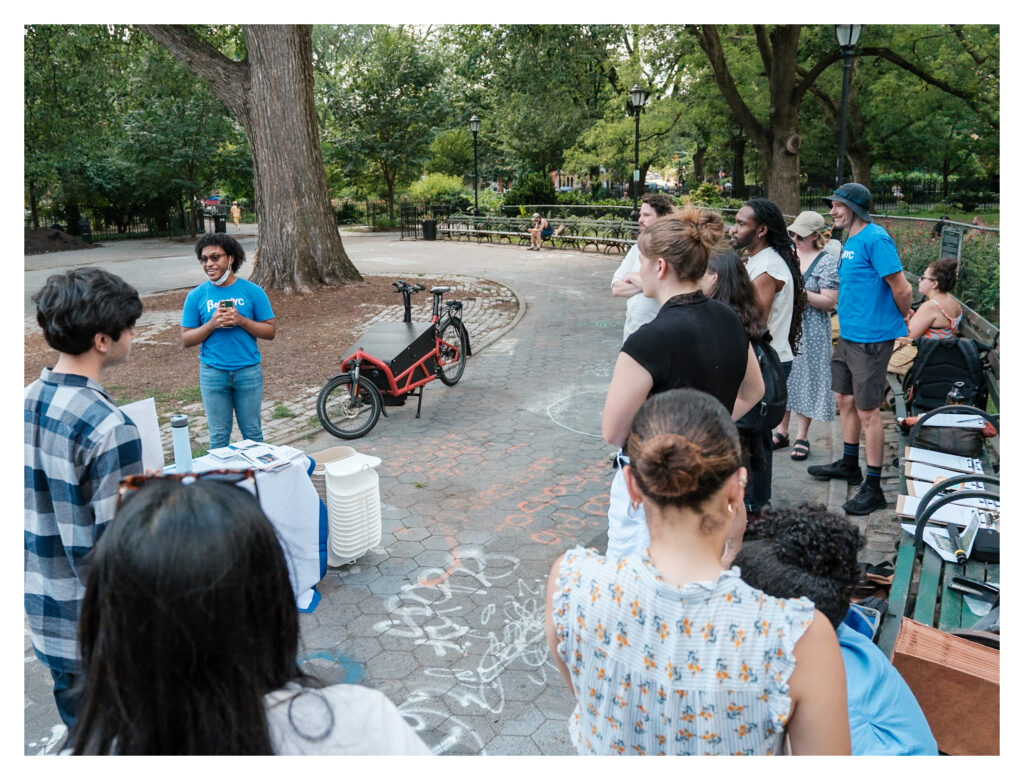
By the end, I came to the realization that each of us contributed a vital perspective informed by our experiences, and posed questions that the team had to address synergistically in order to form a stable basis for their venture. In other words, our differences were our respective strengths–including mine. On the receiving side, this was no small feat for the Ground3d team to achieve. In my next follow-up meeting with them, I found myself inhabiting a space between encouragement and suggestion, fully recognizing that affirmative as well as constructive feedback is integral to motivating brilliant work.
The third and final board meeting centered on the transition from product to a sustainable venture. This was by far the brightest in mood, verging on celebratory. Wil and Zoe led a stellar presentation that showcased how they leveraged the board’s prior feedback to refine their initial proposal into a much more robust basis for a venture, with a more precise model that addressed concerns for both the current and prior themes. It was an impressive demonstration of how diverse and intentional feedback can cultivate a vision, and I was honored to be able to contribute to that process.
It was also heartwarming to witness a room full of individuals with such diverse identities and professional experiences united in a shared passion to support the development of one team’s vision. The evening concluded with well-wishes for the Ground3d team as they moved onward to Demo-Day, the cumulative event of the Delta V Accelerator, during which they would pitch their finalized idea to an audience of potential investors.
Looking to the future
In reflection, I gained a fulfilling experience from my time on a Delta V executive board. I realized that the goal is not necessarily to know as much as or more than everyone else in a professional space. Rather, it’s to know what you do well enough to contribute a meaningful perspective to the greater discourse. Also, if you’ve been invited somewhere….your input probably matters. I also found myself inspired to inhabit similar spaces in the future, and to better value my ability to support others in reaching their professional aspirations.
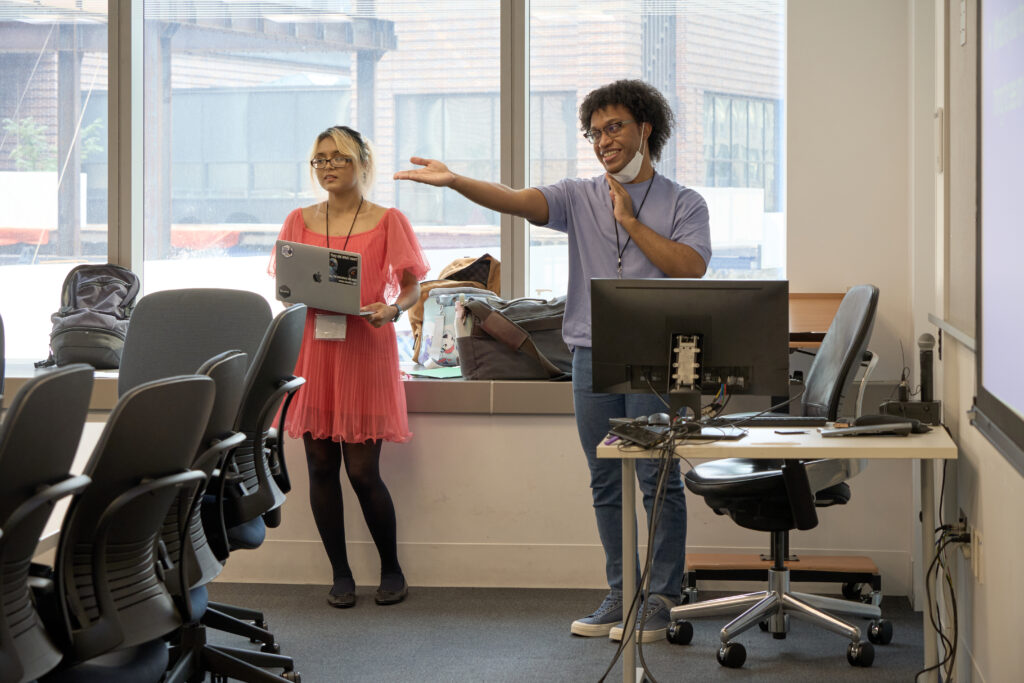
Wil and Zoe have since successfully debuted Ground3d at Demo-Day to a live audience, as well as launched their first product, the Cloudburst Collective. The latter aims to leverage crowdsourced data to support communities vulnerable to flash-flood events phenomena–work made ever more important by the compounded impacts of climate change and environmental racism on marginalized communities. Keep an eye on their next steps!
In the meantime, stay tuned for more updates, narratives, and experiences from our team!