Who We Are: At a Glance
BetaNYC is a nonprofit civic organization that helps New Yorkers use civic design, technology, and data to understand their communities and improve public life.
What we do
- Teach digital and data literacy
- Train the next generation of civic leaders
- Help communities use open data to advocate for equity and accessibility
- Convene New Yorkers around public interest technology
Who we serve
- NYC residents, especially those in underserved communities
- CUNY students and early-career professionals
- Community organizations
- Local government and public servants
2025 highlights
- Our Civic Innovation Lab helped 3,430 New Yorkers apply to their Community Boards.
- Over 9,991 people participated in our 74 events, a powerful testament to the growing civic tech and open data community in NYC. For comparison, in 2024, we hosted 39 events that drew 6,770 people.
- We hosted 21 Mapping for Equity events across all 5 boroughs, training 289 people to map public amenities in OpenStreetMap.
- NYC Open Data Week drew a record-breaking 6,394 participants, while NYC School of Data reached new heights with 564 attendees.
Our Mission
BetaNYC’s mission is to enhance economic equity, community empowerment, and small business development by empowering New Yorkers through civic design, public-interest technology, and open data to create a more inclusive, accountable government.
We believe in a city run by the people, for the people, and work to address a legacy of injustices, divestment, and underfunding of community resources. We follow in the footsteps of the area’s first inhabitants and see ourselves as caretakers of their lands, water, air, and time.
A Brief History
BetaNYC started in 2008 as the “NYC Open Government” Meetup.
Over time, the organization evolved:
- 2009: Relaunched as the Open NY Forum
- 2013: Rebranded as BetaNYC, aligning with New York State’s “Open NY” initiative
- 2013: Community members authored the People’s Roadmap to a Digital New York City
- 2015: Became a partner project of the Fund for the City of New York
- 2016: Launched NYC School of Data and Open Data Week
- 2025: Launched CityCampNYC
Since then, BetaNYC has grown into a trusted civic institution, working at the intersection of community, government, and technology.
Our Values
BetaNYC’s work is grounded in the People’s Roadmap to a Digital New York City. This roadmap articulates four core freedoms that continue to guide our work:
- The Freedom to Connect represents the idea that access to high-speed bi-directional internet is a prerequisite to full civic participation. Economic growth, job creation, educational opportunities, public safety, digital government services, and access to affordable health care depend on affordable and fast connectivity. In 1932, US President Franklin D. Roosevelt emphasized communities’ right to provide electricity. Today, communities need infrastructure for high-speed universal access.
- The Freedom to Learn is the idea that unrestricted access to knowledge, institutions, code, algorithms, data, and tools, regardless of place of birth, ability, language, identity, age, faith, or income, is essential to an empowered and educated public.
- The Freedom to Innovate is central to the advancement of communities and knowledge. Innovation is vital to developing a complex, dynamic, thriving civil society. This City’s heritage claims to be rooted in sharing the land, air, and sea. We need laws and policies that place people before profit, provide universal economic opportunity and care, protect the commons, and allow innovation.
- The Freedom to Collaborate supports the idea that participatory democracy is not centralized. Regardless of status and interface, we must be able to engage with our government, wherever and whenever. We must have the power to effect change and be a government by the people, for the people.
We approach our work through a “human-centered” community-centered lens—an assumption that the most powerful way to solve civic challenges is with those most affected by them.
How We Work
BetaNYC is a connector and cultivator within a broad public interest technology (PIT) and open data community in New York City. We work alongside:
- Community-based organizations
- Public libraries
- Colleges and universities (especially CUNY)
- City and state government agencies
- Residents seeking to understand or use public data
Our role is to equip individuals, communities, and civil servants with digital tools and skills to advocate for transparency, equity, and accountability across government.
Programs and Impact
Civic Innovation Lab
The Civic Innovation Lab at BetaNYC is committed to meeting the growing need for public interest technology in New York City. We use data, design, and technology to make research and information on urban issues more accessible to as many civic partners as possible, especially under-resourced organizations serving disadvantaged communities. Our team works with elected officials, government agencies, and community-based organizations to address pressing research questions, advocate for policy change, and solve problems through digital technology.
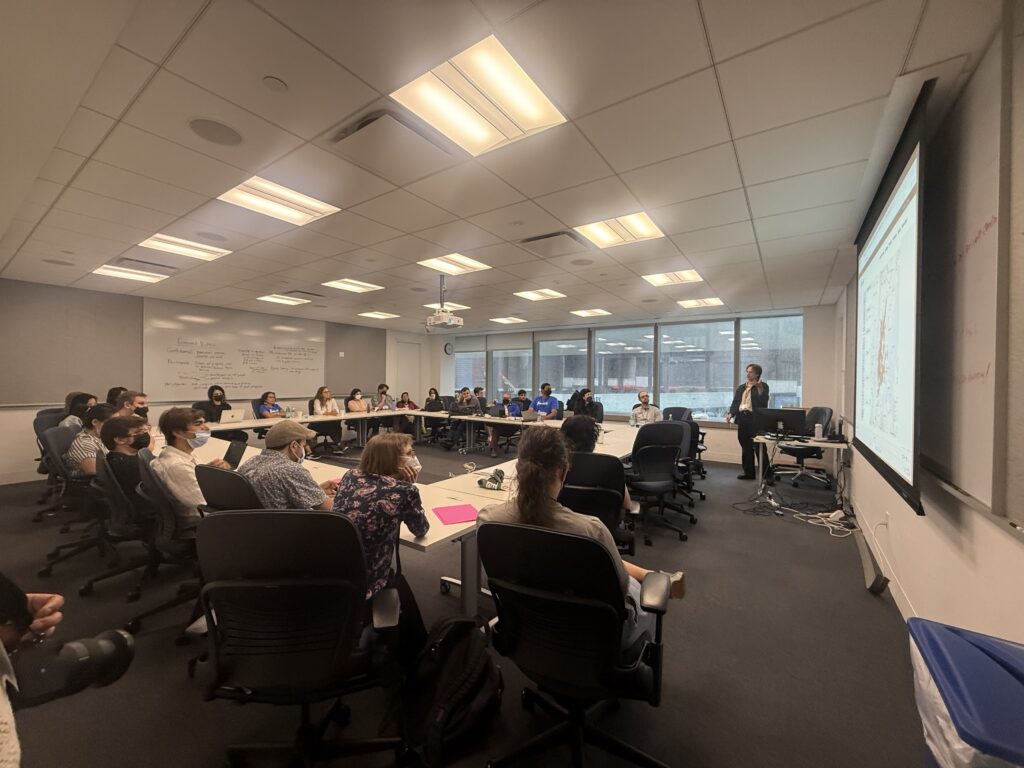
Our Lab aims to reimagine civic engagement in the 21st century by expanding access to public interest technology and leveraging that information to strengthen communities. The Lab collaborates with institutional partners and focuses on data and technology-based solutions, including research, data scraping, data analysis, spatial analysis, mapping, data visualization, information and communication design, and web development.
Goals of the Civic Innovation Lab include:
- Improving access to public interest technology
- Using data and technology to advocate for civic improvements
- Bridging the gap in data literacy by making information easier to understand for public audiences
- Fostering leadership, work experience, and partnership exposure for Lab Associates in public interest technology
- Advocating for transparency and accountability through open data
2025 impact:
- We received 44 community-driven data projects across New York City.
- We helped 3,430 New Yorkers apply for their Community Boards, strengthening local democracy and helping everyday residents shape city decision-making.
- Our upgraded Boundaries Map reached 47,000 people, giving them critical information about the places they call home.
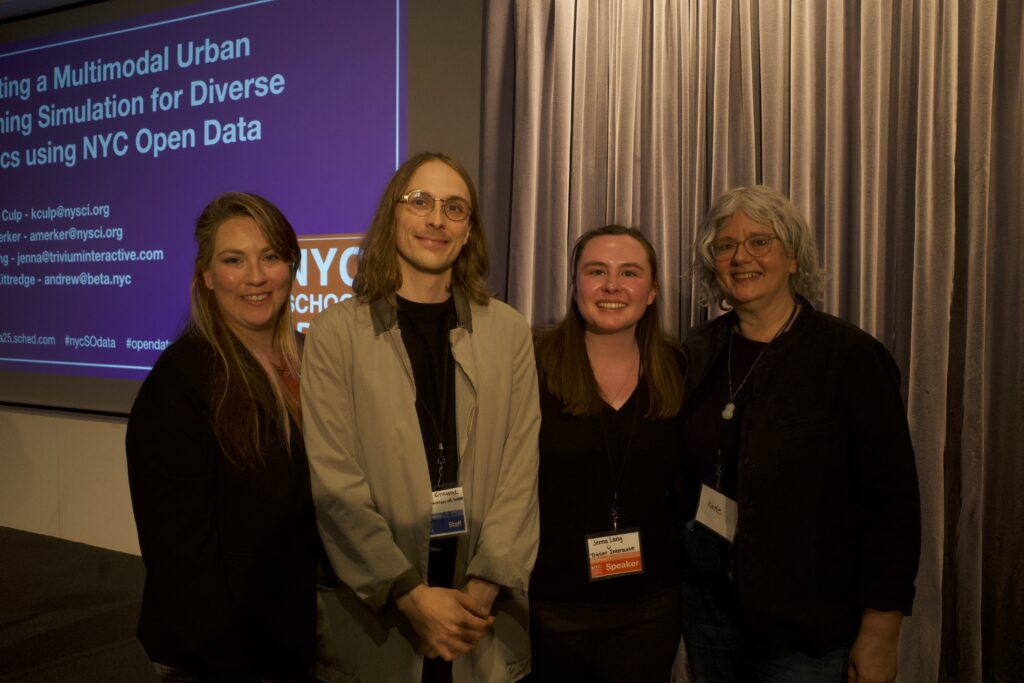
In 2026, we plan to continue partnering with community organizations, government agencies, and advocates to answer real-world questions using data and technology.
Civic Innovation Fellowship (CIF)
The Civic Innovation Fellowship (CIF) is a rigorous program that trains New Yorkers in data analytics, mapping, and public interest technology. We carefully select Fellows through a partnership with the CUNY Public Interest Technology Lab (PIT), which selects students for participation who demonstrate strong civic-mindedness, an appetite to learn, critical thinking skills, and a deeper purpose to support NYC communities.
We train Fellows in public interest technology, civic technology, open data, geographic information systems (GIS), and service design fundamentals. They learn about the City’s history and how the “good government movement” developed. As part of the training, fellows partner with community organizations to explore a range of public-interest technology projects of their choice.
The CIF curriculum is a comprehensive course in civic technology and public-interest data delivered over two college semesters. Through this curriculum, fellows not only develop technical and analytical skills but also become active participants in shaping NYC’s civic technology ecosystem.
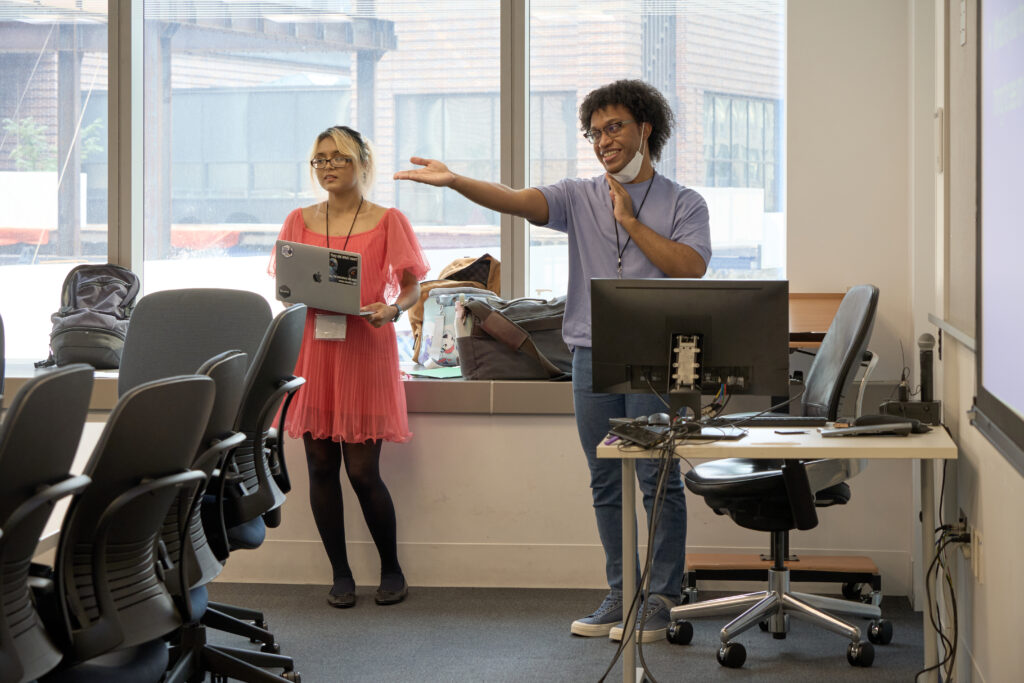
Fellows receive hands-on experience in:
- Professional Skills Development – Understanding workplace protocols, collaborative communication, and project management in civic tech.
- Civic Engagement and NYC Governance – Exploring the history of NYC government, how policies shape public space, ways to engage with local decision-making, and investigating the role of data ethics in civic technology and governance.
- Open Data and Storytelling with Data – Learning how to navigate NYC Open Data, clean and analyze datasets, and use storytelling techniques to communicate insights.
- Community Leadership & Event Planning – Developing skills in public engagement by organizing community-driven mapping and data collection events.
- Public Interest Data & Artificial Intelligence – Exploring the role of AI in civic technology, its ethical implications, and real-world applications, including bias, equity, and the future of AI in public interest work.
The fellowship creates a clear pathway from education to civic tech careers, helping diversify and strengthen the public interest technology workforce.
Mapping for Equity (M4E)
A defining and long-lasting initiative within the CIF has been Mapping for Equity (M4E), a community-centered project that blends civic learning with real impact.
Origins and purpose
Mapping for Equity began as a focused project within the Civic Innovation Fellowship to explore how open data can make the city work for all New Yorkers. From the start, fellows asked a simple yet powerful question: How can communities understand and document the public resources in their neighborhoods—and use that information to advocate for more equitable and accessible public spaces?
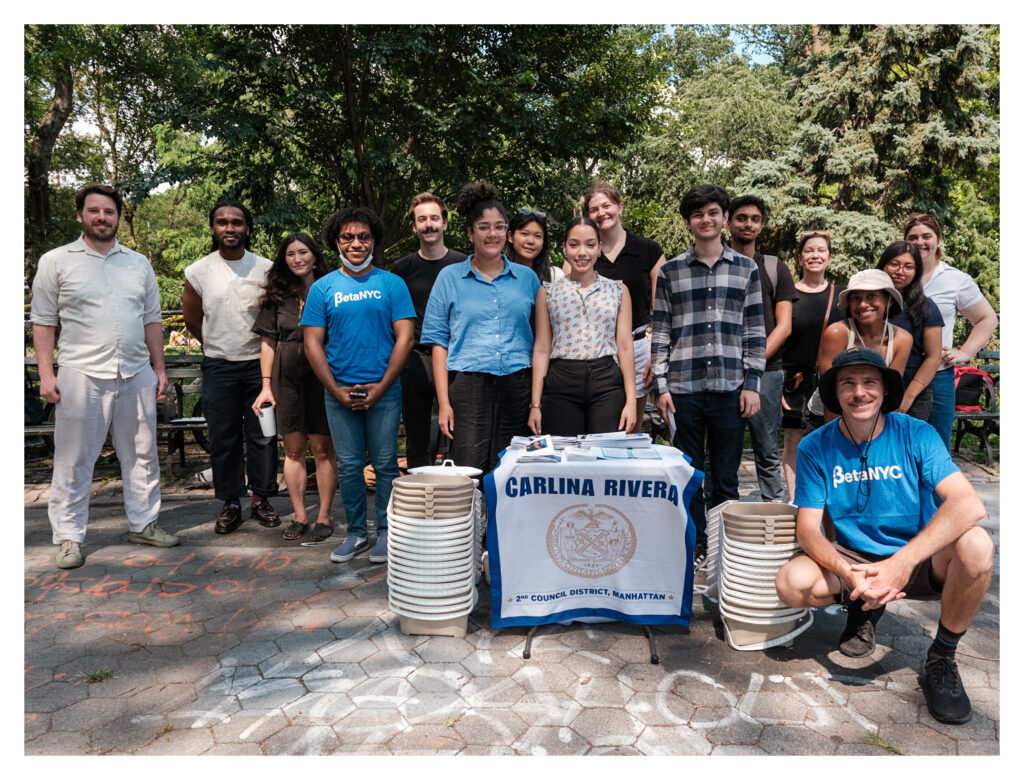
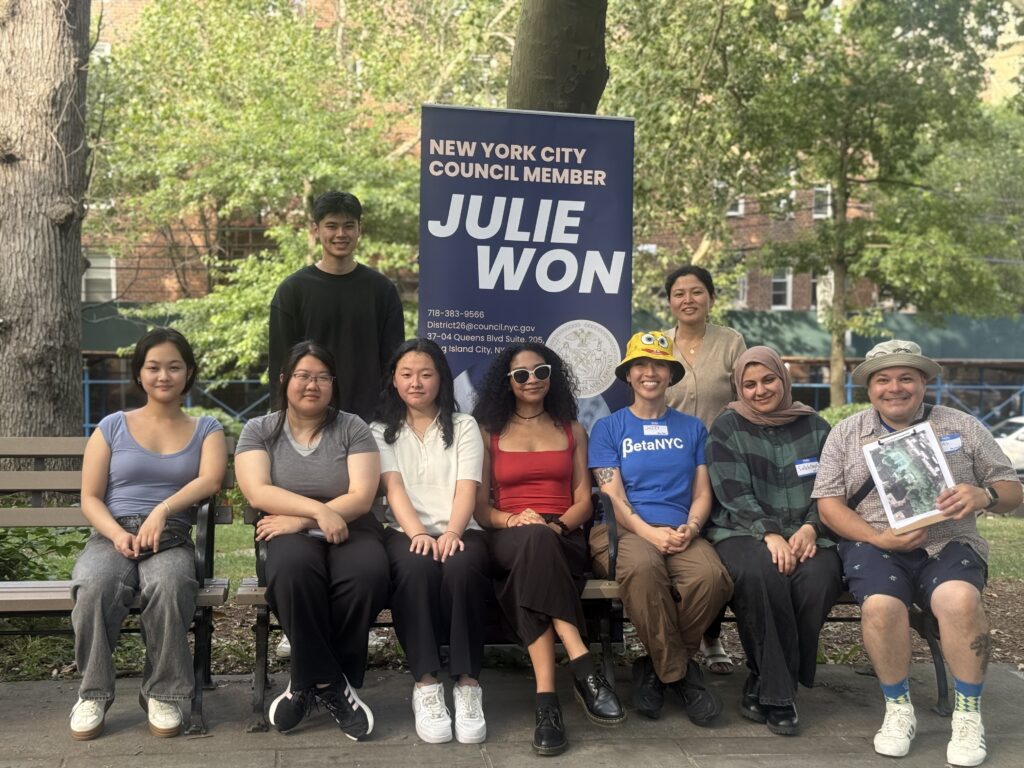
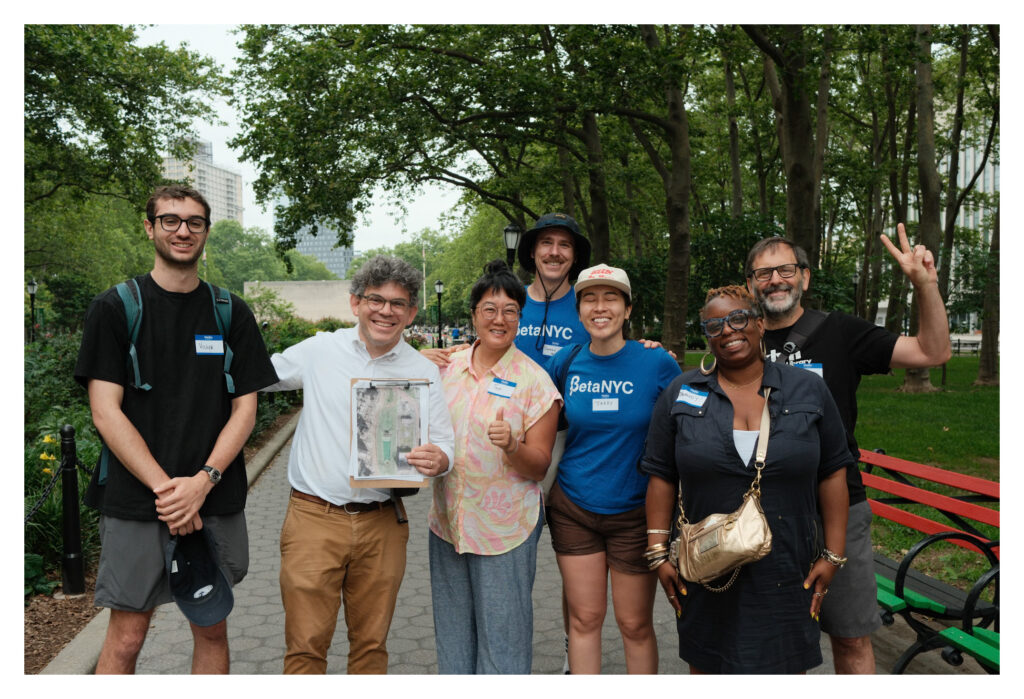
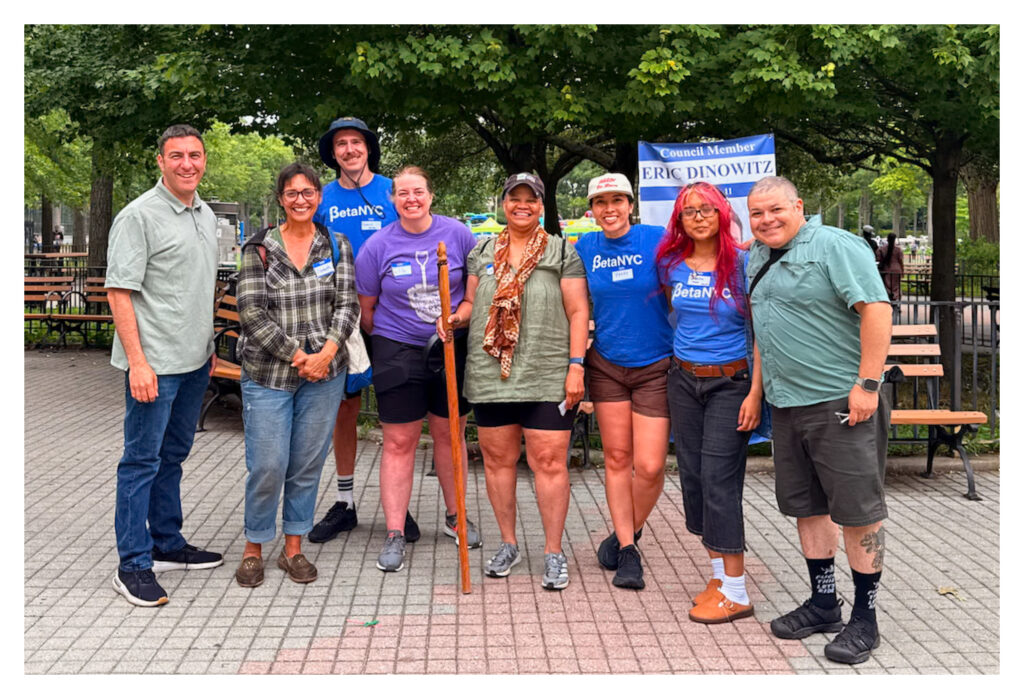
The M4E curriculum intentionally starts with foundational data and civic literacy before moving into hands-on mapping. Participants learn to “see data” in their surroundings and contribute their observations to OpenStreetMap (OSM), a free, editable global map that anyone can use for advocacy, planning, or decision-making.
How it works
- Field Mapping Workshops: Fellows and community members gather in parks and open spaces to survey features, such as benches, pathways, lighting, water fountains, and accessible infrastructure.
- Data Entry Workshops: Participants turn collected field observations into open data by entering them into OpenStreetMap, making the information publicly reusable and searchable.
In 2025, we turned our curriculum and event design into a toolkit so that others — from individual residents to community groups and educators — can host their own mapping events.
2025 outcomes:
- We hosted 21 Mapping for Equity events across all boroughs and taught 289 people how to map public amenities in OpenStreetMap.
- We mapped 897 public amenities across NYC’s parks and open spaces.
- Our community mappers captured essential features that shape daily life, including 311 benches, 155 lampposts and streetlights, 63 play and youth structures, and 368 water fountains, gardens, bicycle parking, and public restrooms.
- In addition, our community mapped 2,942 feet of paths, sidewalks, and ramps, improving visibility of the city’s walkable, accessible infrastructure.
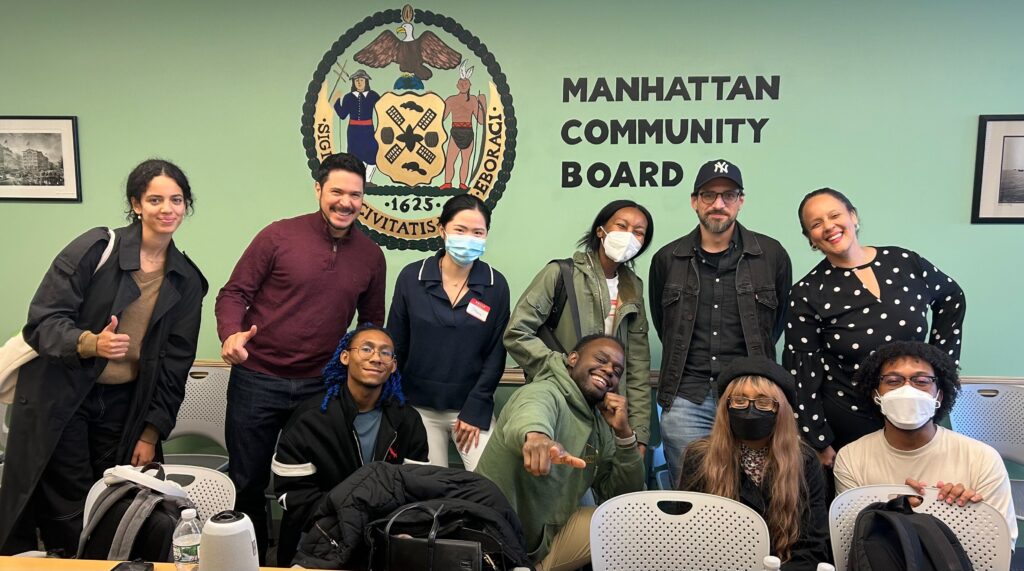
Mapping for Equity exemplifies the Civic Innovation Fellowship’s broader mission: equipping emerging civic technologists not only with technical skills, but with the confidence and experience to engage meaningfully with neighbors, policymakers, and public data systems. By transforming lived experience into open, public data, fellows and participants help expand who gets counted, whose needs are represented, and how New York City understands its own public spaces.
Public Programs
BetaNYC’s public programs are designed to make civic technology, open data, design, and government information accessible, relevant, and valuable to everyday New Yorkers.
For many residents, public data and civic systems can feel intimidating, overly technical, or disconnected from daily life. Our role is to lower those barriers — translating complex systems into hands-on learning experiences that help people understand how their city works and how they can shape it.
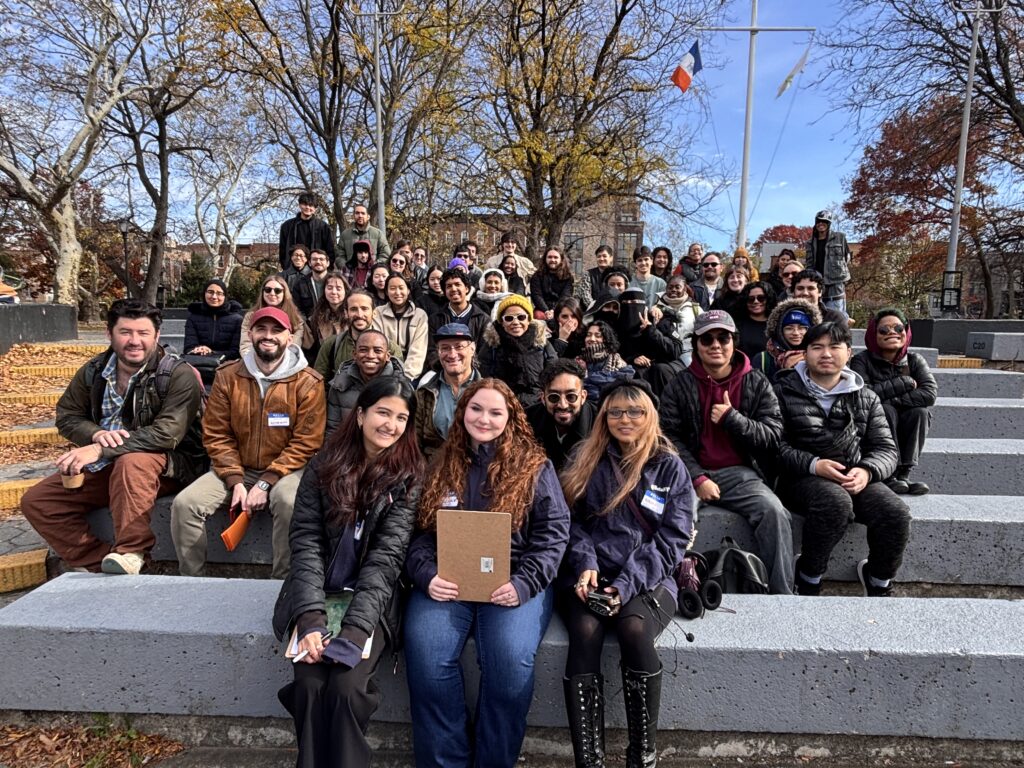
Across all public programs, BetaNYC prioritizes:
- Free and low-barrier participation
- Hands-on learning
- Community-centered facilitation
- Accessibility and inclusion, especially for communities historically excluded from data and technology spaces
These programs serve a wide range of audiences, including residents, students, educators, librarians, nonprofit staff, community board members, and public servants. Some participants are encountering civic data for the first time; others are building advanced skills to support their communities or professional work.
Together, BetaNYC’s public programs help New Yorkers:
- Ask meaningful questions about their neighborhoods
- Understand and use NYC Open Data responsibly
- Build confidence engaging with government systems
- Connect with others working toward more equitable civic outcomes
2025 general highlights
- We hosted 74 events, expanding access to public interest technology, open data education, and community-driven problem solving across the city.
- More than9,991 people joined our events, showing just how much NYC’s civic tech and open data community is growing.
We put these principles into practice through a suite of public programs that invite New Yorkers to learn, connect, and take action together.
NYC Open Data Week
NYC Open Data Week is an annual citywide festival celebrating public data and civic engagement across New York City.
Co-organized with the NYC Office of Technology and Innovation (OTI) and Data Through Design, Open Data Week brings together residents, government agencies, educators, artists, technologists, and technology advocates through dozens of free virtual and in-person events.
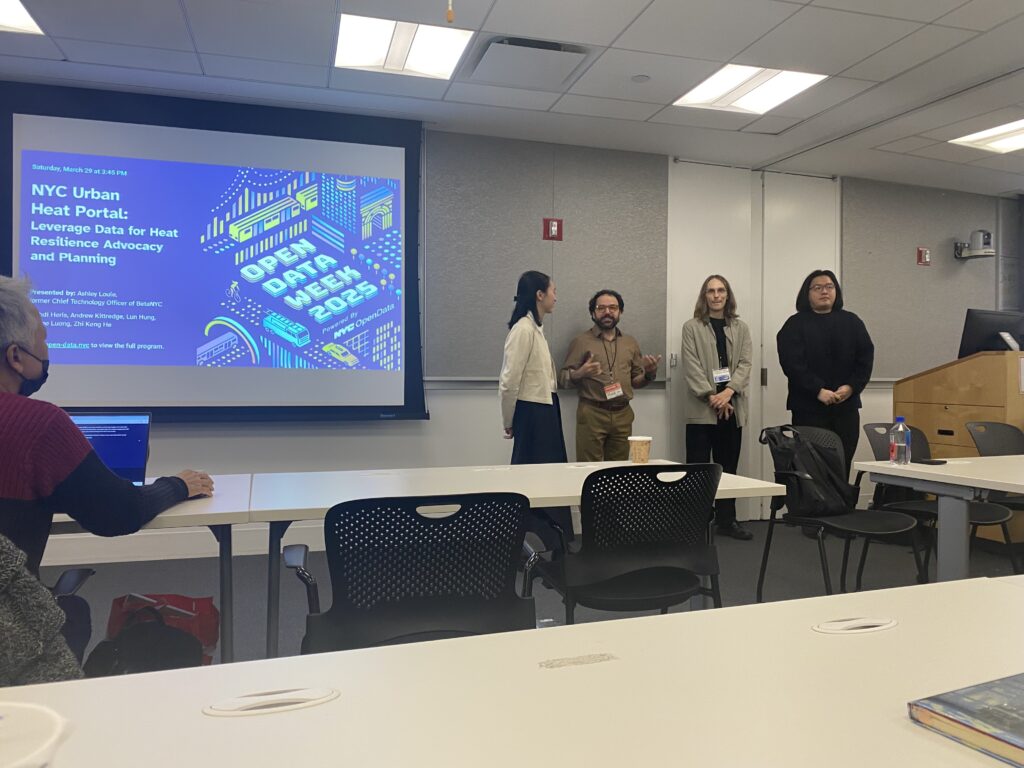
2025 Open Data Week milestones
- NYC Open Data Week drew a record-breaking 6,394 participants, demonstrating a growing public need for transparent, accessible data.
- Our NYC Open Data Week newsletter reached a record of 4,951 subscribers in November 2025. This audience continues to be one of the city’s most active communities engaging with open data, civic tech, and public interest technology.
The week culminates in NYC School of Data, a one-day conference that anchors the festival and convenes the city’s public interest tech and open data community.
NYC School of Data
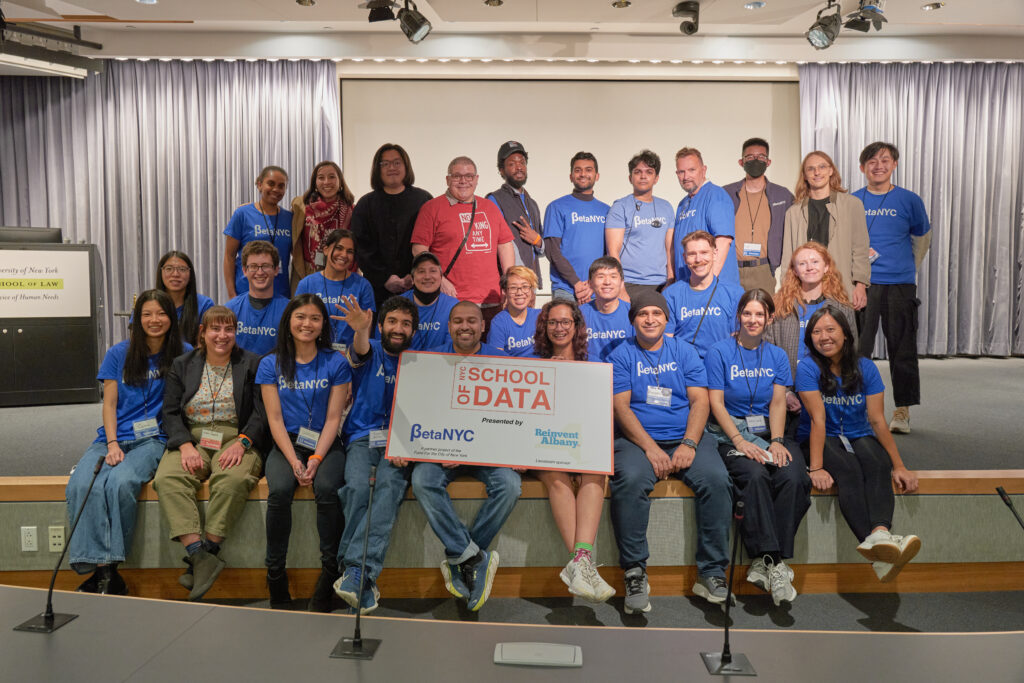
NYC School of Data is an annual community conference that brings together New Yorkers interested in open data, public interest technology, and service design.
Historically, we have organized this event in multiple formats, including unconferences, hackathons, and traditional conference sessions, always with a focus on community learning and collaboration.
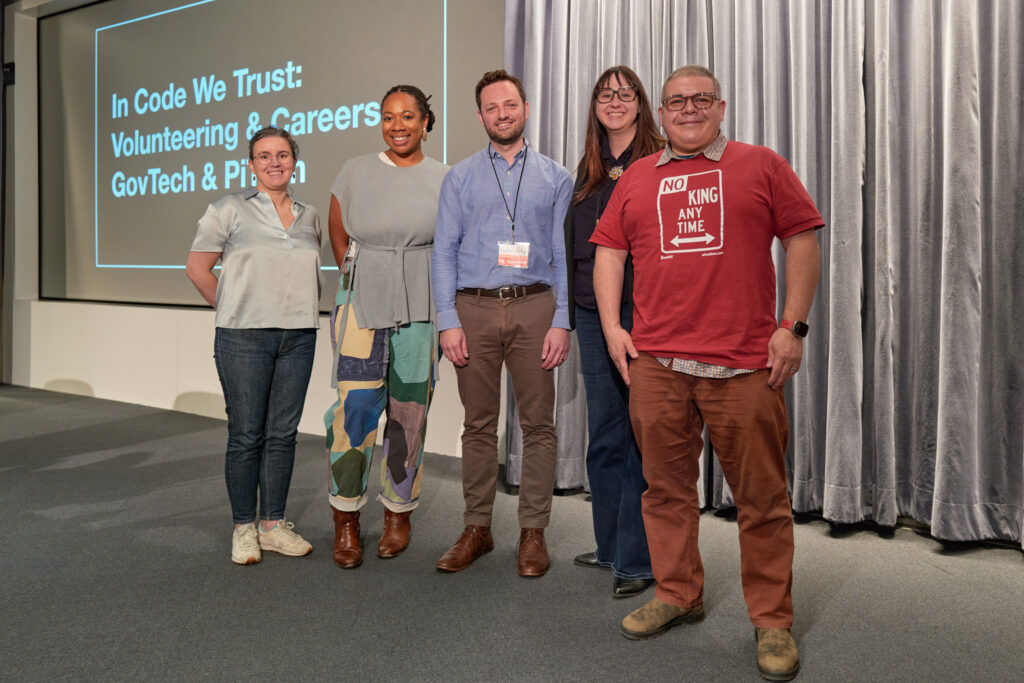
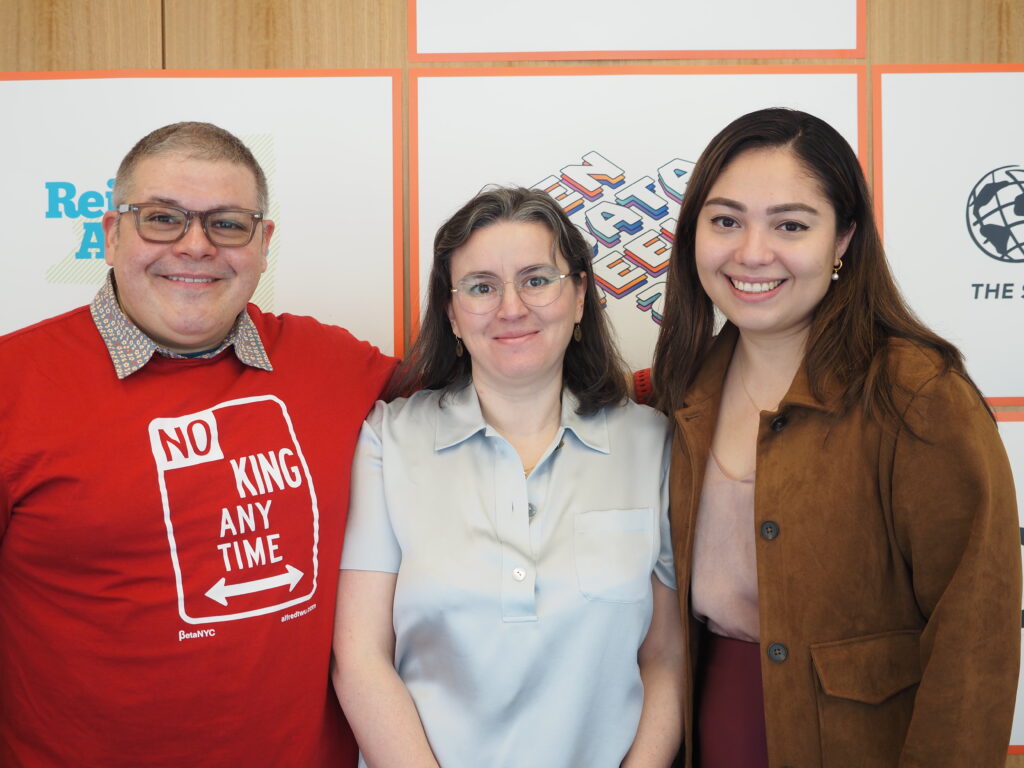
NYC School of Data provides a welcoming space where residents and public servants alike can learn from one another and explore how data can be used to improve neighborhoods and city services. Last year, we reached new heights with 564 attendees, strengthening the city’s public interest tech ecosystem like never before.
Following a record-breaking NYC School of Data, we launched CityCamp NYC, our community unconference designed to give New Yorkers more space to connect, collaborate, and experiment with public interest tech ideas.
CityCamp NYC
CityCamp NYC is a participatory forum where residents, public servants, and civic innovators come together to discuss ideas, challenges, and solutions related to how New York City works.
Our unconference emphasizes conversation, co-creation, and peer learning, offering an open space for participants to share experiences and explore ways to strengthen civic engagement, government services, and community-driven innovation. The format encourages collaboration across sectors and disciplines, reinforcing our belief that we can build better cities together.
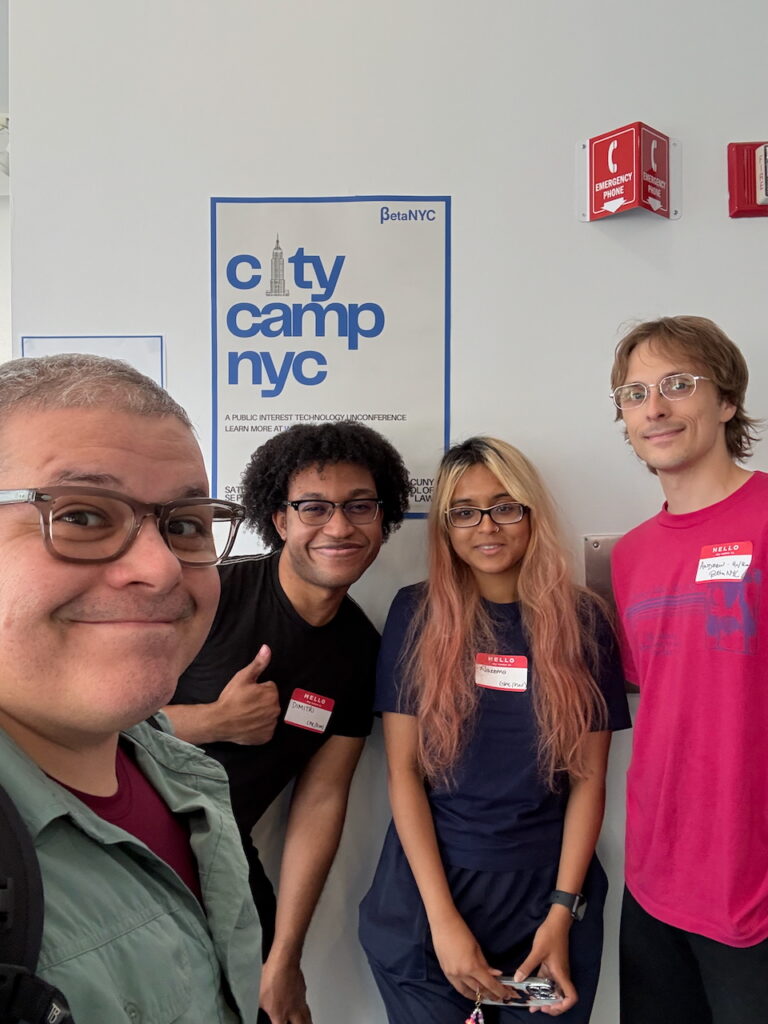
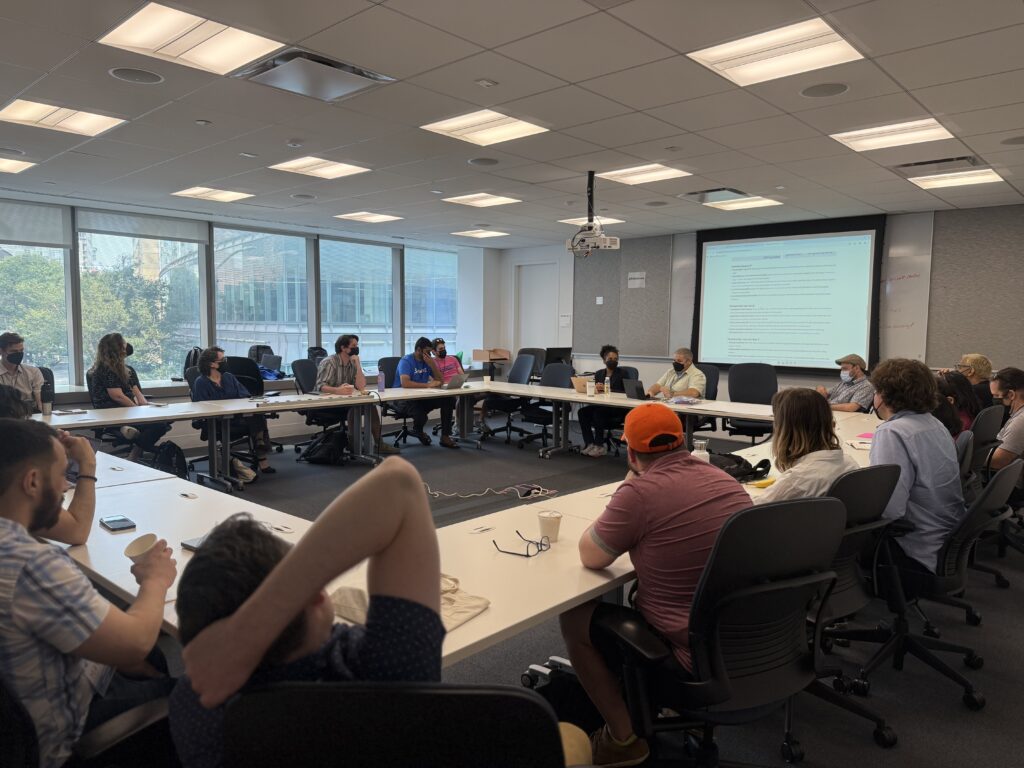
This past September, CityCamp NYC brought together 204 neighbors, civic leaders, technologists, advocates, and public servants, extending the energy of a record-setting NYC School of Data into a full day of community-driven collaboration.
Open Data Ambassadors
The Open Data Ambassadors program trains volunteers to become trusted, local guides for NYC Open Data.
Ambassadors receive instruction on navigating the Open Data portal, interpreting datasets, and teaching others in accessible ways. They then work with libraries, community organizations, and local institutions to deliver workshops tailored to neighborhood needs and interests.
In 2025, 1,089 people participated in our intro to NYC Open Data classes, hosted in partnership with the NYC Open Data team, which equipped residents, students, teachers, technologists, researchers, and public servants to understand how their city works and advocate for change using accessible public data.
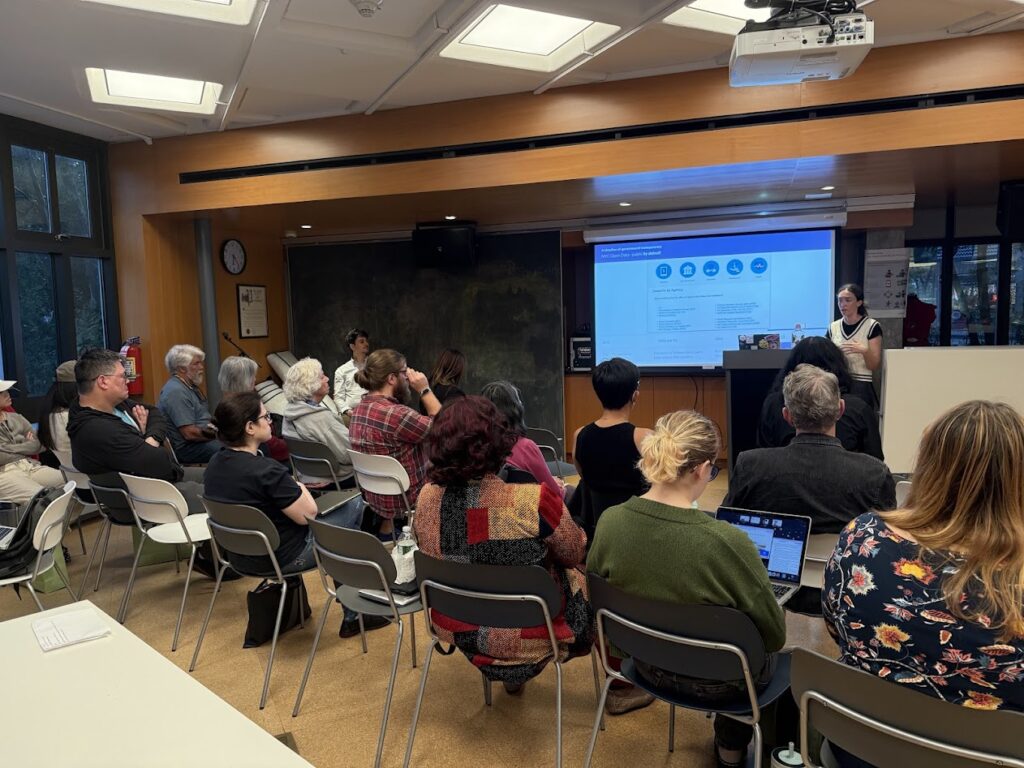
By embedding data literacy within familiar community spaces, Open Data Ambassadors help ensure that access to public information is not limited to technical experts.
BetaBagels
BetaBagels is our breakfast salon series—a casual, conversation-driven meetup where New Yorkers come together to discuss government, technology, and data over coffee and bagels.
Since our first breakfast gathering in 2018, BetaBagels has served as a welcoming space for people to learn what’s happening in civic tech and public policy, meet the people behind the work, and hear directly from municipal leaders about how our government is evolving.
Each event features civil servants, community leaders, and civic innovators who share their perspectives on how government systems shape our everyday lives. Through open, informed dialogue, BetaBagels builds bridges between municipal government and the residents and communities that rely on government services.
This past December, we brought BetaBagels back with a virtual conversation focused on the future of New York City’s government technology and public interest tech policy. Speakers from various civic tech organizations discussed issues such as digital services, data governance, the public sector tech workforce, and how these topics can shape the new mayoral administration’s agenda.
Open Data Journeys
Open Data Journeys are hands-on workshops that help New Yorkers use public data to explore real questions about life in the city.
In each session, participants learn how to find and use NYC Open Data through everyday topics such as housing, street safety, noise, and access to parks. Rather than focusing solely on technical skills, Open Data Journeys emphasize practical, approachable learning, showing people how public information can connect directly to their lived experiences.
In 2025, we brought Open Data Journeys back after nearly 5 years, welcoming a new group of participants eager to understand their city through data. In this updated journey, our Junior Associates took participants on a journey regarding motor vehicle collisions.
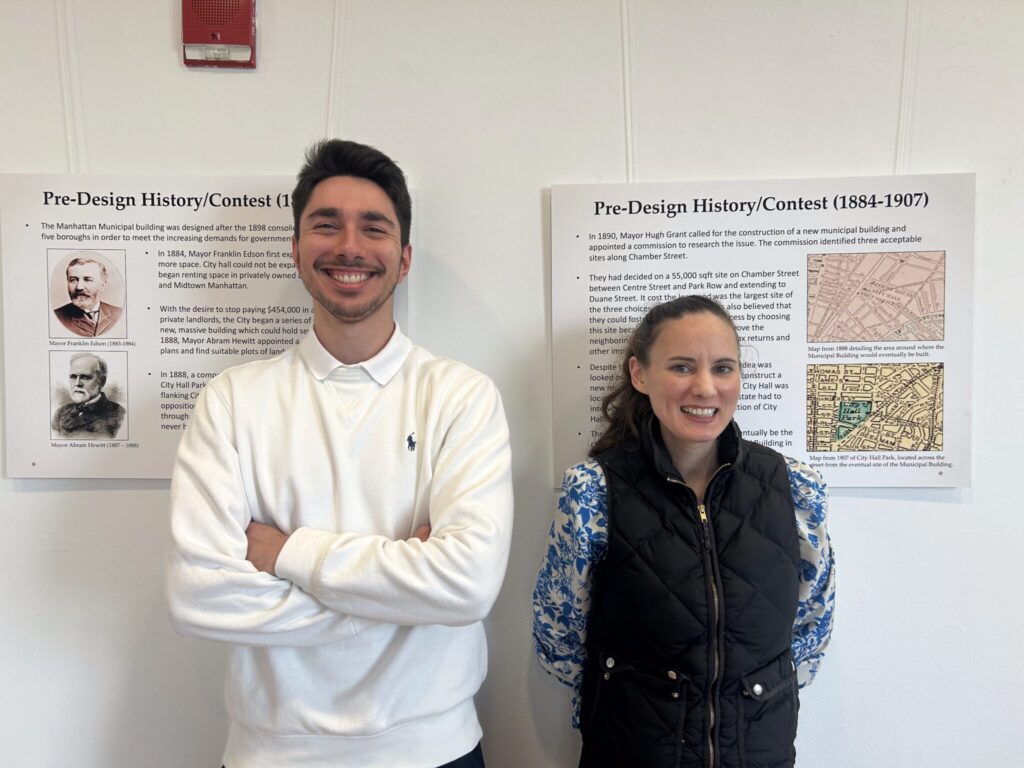
The program’s return reflected growing interest among New Yorkers who want not just access to data but guidance on how to use it meaningfully.
Looking Ahead in 2026
In 2026 and beyond, BetaNYC will focus on:
- Expanding the Civic Innovation Fellowship into a scalable workforce development pipeline
- Deepening partnerships with CUNY and higher education institutions
- Integrating responsible AI education into all training programs
- Increasing accessibility, translation, and community outreach
- Building a national model that other cities can replicate
Three focal points for 2026:
- Digital and data literacy across our communities.
- Civic solidarity by leveraging our heads and hearts to support our neighborhoods.
- Transcending the traditional workforce development model.
How do these three come together?
Digital and data literacy across our communities will now include basic artificial intelligence literacy. In January, we kicked off a new curriculum to support the City Council’s AICE program. In April, we will support the Civic Engagement Commission’s training of Community Boards in artificial intelligence. Throughout the year, we will support OTI’s Open Data Ambassador program, host our own Mapping for Equality classes, and continue to grow opportunities to discuss the opportunities and impact that incremental and exponential artificial intelligence will have across our communities.
We will build civic solidarity by leveraging our heads and hearts to support our neighborhoods. We need the public interest/responsible tech and open data communities to show up in Community Boards, Parent Teacher Associations, Solid Waste Advisory Boards, and all other places where we can utilize our professional talents. Our skills are most useful in serving neighborhoods. From there, we will facilitate community events that enable us to socialize issues and discuss potential solutions. This is why we are hosting an unconference as part of NYC School of Data and will bring back CityCamp NYC in September.
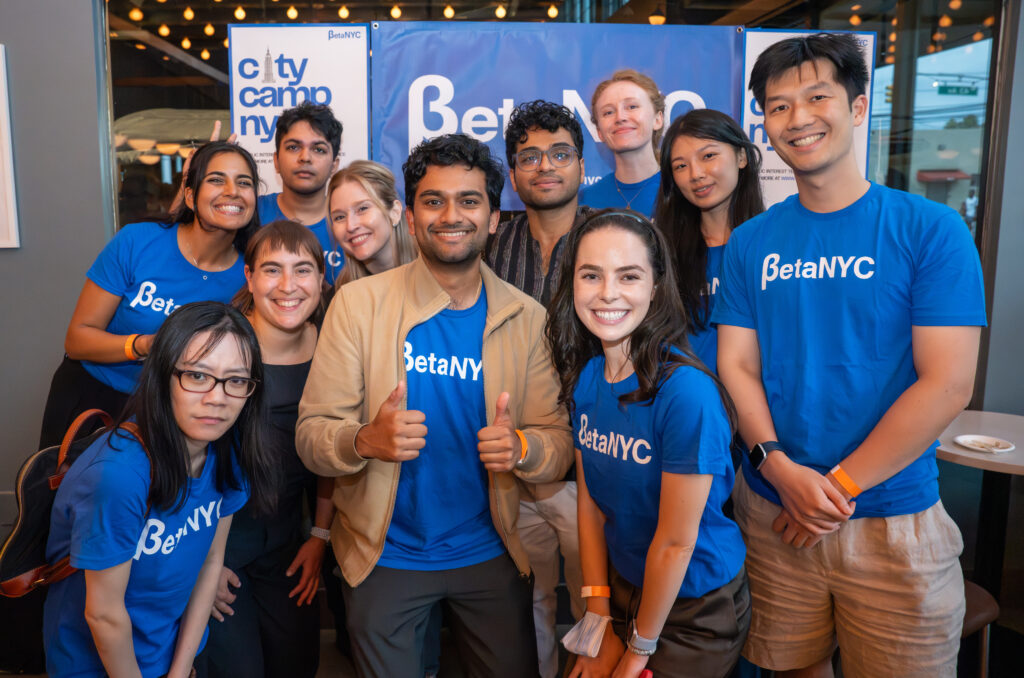
Lastly, we will continue to transform workforce development in the public sector. BetaNYC’s Civic Innovation Fellowship is a hands-on, paid program that equips CUNY students with real-world civic tech experience by embedding them in public-interest projects that use data, design, and technology to improve how New York City works for its residents. We see a unique opportunity to bring together our digital and data literacy classes with our unique understanding of NYC’s civic topology to give our fellows a unique civic employment experience. While we will continue to mentor and develop professional experiences for our CUNY students, we will be more proactive in finding employment opportunities for them.
Gratitude and Support
BetaNYC’s work is made possible through partnerships with:
- New York City Council
- Siegel Family Foundation
- Alfred P. Sloan Foundation
- Rockefeller Brothers’ Fund
- New York City’s Office of Technology and Innovation
- Office of the Bronx Borough President Vanessa Gibson
- Office of the Brooklyn Borough President Antonio Reynoso
- Office of the Manhattan Borough President Mark Levine
- Office of the Queens Borough President Donovan Richards
- New York City’s Civic Engagement Commission
- New York PIT University Network
- Fordham University
- New York University
- CUNY PIT Lab
Together, we are building a more inclusive, transparent, and accountable city. Thank you for your support!