Hello Friends,
We hope you’re safe, staying warm, and recovering after the latest blizzard. Between the snowbanks, slush puddles, and slow commutes, it’s been a week. If you’re still navigating icy sidewalks, we’re right there with you.
The days are getting longer and spring is right around the corner! Here are THREE things you need to know.
The School of Data Preliminary Program is live!
First, NYC School of Data is coming into focus — the preliminary session schedule is ready for you to explore! Early bird registration is open, and we’re seeking volunteers. Likewise, NYC Open Data Week is just around the corner! The festival schedule will be announced shortly, so be sure to bookmark opendataweek.nyc.
Meanwhile, our friends at Data Through Design have been previewing the artists behind this year’s exhibition pieces. We’re especially excited to see a familiar name: BetaNYC alum HaoChe Hung. Congratulations, HaoChe! We’re so proud to see your work featured as part of this year’s showcase!!
Introducing PITech’er of the Month!
As we continue to celebrate this community’s work, we’re thrilled to introduce the Public Interest Technologist of the Month series. Allen Hillery is an educator, analyst, and community organizer. Be sure to check out our interview and learn more about his work and impact!
What is the future of the Council’s Technology Committee?
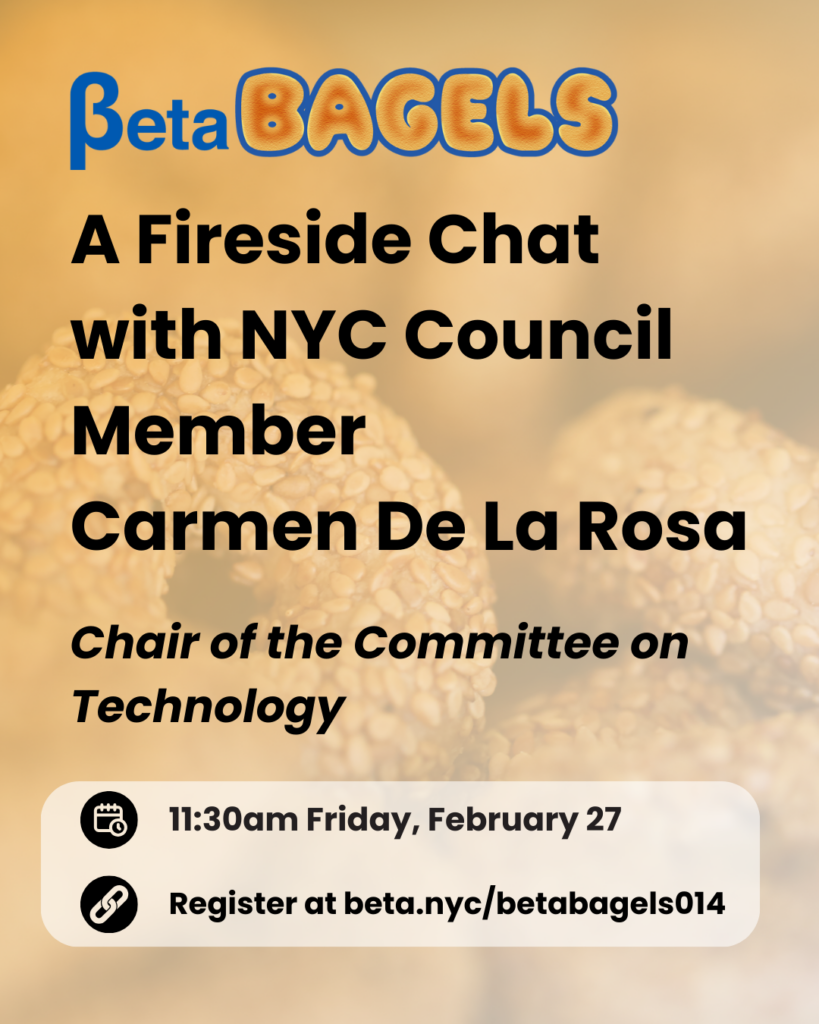
Tomorrow morning, we’re hosting a virtual fireside chat with Carmen De La Rosa, the new Chair of the NYC Council Committee on Technology. We hope to see you online!
Take care, and see you next week,
Gabrielle Langston & Noel Hidalgo
Public Interest Technologist of the Month ✨
Recently, our Civic Innovation Fellows, Ayela Janjua and Jillian Melough, sat down with Allen Hillery for an insightful conversation about his path into public interest technology, previewed his School of Data session, and looked ahead to the future. Check it out!
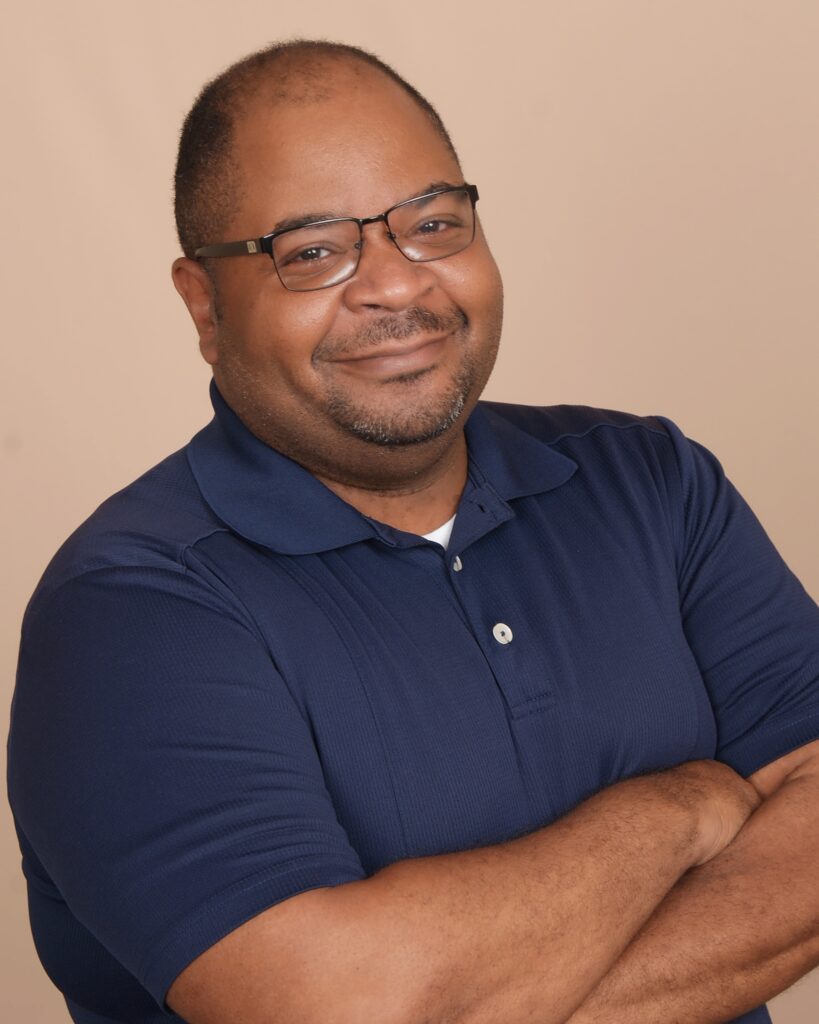
Allen Hillery, (He/Him) – Teaches Data Storytelling at Macaulay Honors College
Q: How did you get started in public interest technology?
Allen: My interest started when I left corporate America. I was looking to do something more fulfilling. While I was teaching part-time at Columbia, I taught a course called Data Storytelling, and it really resonated with me… that people in my tech community needed to convey their insights more effectively.
I decided to teach more people about data literacy. When I define data literacy, it’s about being more familiar with data and using it to help you tell your stories and support your analysis and narrative… I had this idea that if we’re going to teach data literacy to different communities, we would tap into city and civic data … and then people would be interested because they have a connection to it. And so it was really trying to come up with that model, so to speak.
So that was my first foray into public interest technology. It’s been able to evolve in ways I didn’t plan on. Over the years, I joined the BetaNYC Slack channel and attended School of Data a few times. Now I’ll be going again, hopefully, we can talk more about that.
Q: What have some of your experiences been at School of Data?
Allen: The first time I went to School of Data was in 2020. That’s when COVID was coming across the ocean.
And people were wondering, okay, what should we do? But we were still just enjoying ourselves that day. It’s an amazing experience… You can see so many different applications of data… And seeing everyone else be excited, it was really great to be a part of that.
The next time I went, we were on the Cornell Tech campus. And so it was really nice to be back… You get so much exposure and meet so many people who are into data. And I just see it as a really fun time.
This year, our Data and Society Fellows from CUNY Macaulay Honors College will be sharing their team projects on flood-vulnerable communities in New York City. So definitely stop by if you can, see what CUNY students are working on, and learn more about New York City flooding.
Q: How do you see your work progressing in the future?
Allen: I see the future as empowering other students to take on this work and to know that there’s a career path where you can combine a lot of your interests. When I work with computer science students, they think the path to mobility is to become a software engineer or join big tech. And the good thing about what I do with the students is show them different career pathways. With the Data and Society initiative, I started working with the Provost, who wanted to help liberal arts students who have such a wide avenue of career paths. Still, at the same time, sometimes you have that paradox of choice. So you don’t know exactly what you want to do.
In fall 2024, we partnered with the MTA and looked at civic questions such as the Fair Fares Program and accessibility to subway stations. It goes back to my original idea of having a community look at data that’s specific to the city— something they can relate to. And it gave them [students] the encouragement to do something they may not have done, like working with huge data sets or putting together a data story. It helps them understand civic engagement isn’t as boring as you may think.
Q: What gives you hope on a daily basis?
Allen: Getting people to listen. We’re seeing a lot of AI in the headlines, and a lot of innovation, and what I would really love to see is for people to try to work at putting the humanity back into it. As a society, we’re very profit-first and not always looking at how this impacts our communities or how we can leverage this to help our city.
When I’m in class, and I see students being mindful—asking, “Maybe we should think about this”—that gives me hope. We may not be able to change everything right away, but it’s the small things we can do that collectively push the needle.
Dr. Brandeis Marshall talks about bringing humanity back to AI and the need for social scientists to be part of the tech community… that’s definitely one of the things that’s hopeful to me, because we are incorporating more critical thinking and more liberal arts. For better or worse, AI is discouraging a lot of people from just pursuing pure computer science.
Q: What advice would you give the next generation of public interest technologists?
Allen: Celebrate the small wins. Don’t overlook small achievements or small advancements… and celebrate those micro joys, because they do add up and they keep you going.
This field of tech and AI can be daunting for many reasons. Sometimes, when we face these challenges, it causes us to innovate. I’m really happy to see spaces like public interest or even civic engagement leveraging tech more. A lot of advancement has been on the big tech side.
Many cities and grassroots organizations historically have not been able to leverage tech as much. I’m seeing a growth in that… Just know that if you can get two or three people aware, you may not be able to change their minds, but you can at least get them to understand the implications of not always thinking about the human impact of innovation.
One of the great things about AI technology is that it allows us to see some of these trends and patterns we may not have seen as easily with the human eye. It’s just what we do with that information.
You may feel as if you’re in a position where you can’t say anything, but at least put the information out there. You may not be able to change an inherent bias you see in a trend, but you can at least make people aware of it. That trickle, that ripple effect, can create some change.
Support BetaNYC Today! 💗
Because you showed up, our public programs reached new heights in 2025: 6,394 people joined NYC Open Data Week and a record 564 gathered at NYC School of Data to build skills, relationships, and civic power together.
If the newsletter (and our events) have helped you feel more informed, connected, or empowered, please chip in today and help us reach 200 sustaining donors: https://beta.nyc/donate
What’s New at BetaNYC? 🚀
- ICYMI: Our 2025 impact report is out. It’s a deep dive into what our community made possible last year, from open data projects to publis interest tech work that supported our neighbors. Take a look at the full report.
- Looking for a way to show up for your neighborhood? Community Board applications are open in The Bronx, Manhattan, and Staten Island. Plus, the Bronx extended their deadline to March 1! If you missed last month’s BetaBagels, it’s a warm, low-pressure primer on how to get involved. Get your applications in—deadlines are coming up soon.
Upcoming Events with BetaNYC 🎊
- February 27 at 11:30 am BetaBagels 014: a Fireside Chat with NYC Council Member Carmen De La Rosa – Chair of the Committee on Technology
- March 11 at 6 pm Discovering NYC Open Data: Online Session: March 2026
- March 20 at 12 pm The Common Ground Open Science March 20, 2026 Event Reservation
- March 22 to 29 NYC Open Data Week 2026 — program coming soon!
- March 28 NYC School of Data — get your early bird tickets!
- March 29 UnSchool of Data — get your early bird tickets!
Election Corner 2026 🗳️
- A policy pivot worth paying attention to: Governor Kathy Hochul reverses course on allowing Waymo to expand autonomous vehicle testing outside New York City, raising new questions about what comes next for New York’s approach to AV pilots.
- How does our property tax system work? THE CITY breaks down NYC’s property tax structure and the reform debate, including the possibility of raising taxes.
This Week’s Media Watchlist 🎥
- A vivid slice of NYC life during extreme weather: Hell Gate captured street-level scenes from the Blizzard of 2026, focusing on the people, routines, and improvisation that show up when the city slows down. (Paywall)
- A timely read if the season has been hitting you hard: Gothamist examines why winter blues have felt especially intense this year, what clinicians say they’re seeing, and what supports and treatments can actually help.
- A fun, snowy history: City & State explores the so-called “snowy 666 curse” idea, tracing patterns in big NYC snow years that end in 6 and how much weight the pattern deserves.
- A look at the numbers behind the politics: NYC Policy Forum digs into what “affordable housing costs” actually mean in NYC, including building finances, debt, operating costs, and why some policy debates get stuck when the math stays hidden.
- Accountability and public spending: THE CITY reports on a federal case involving alleged bribery tied to NYPD procurement, including the people involved and how the scheme is described by prosecutors.
- A close look at the phone-ban moment in schools: The New York Times examines Yondr pouches and other “phone-free school day” approaches, including how bans work in practice and what students, parents, and educators are experiencing. (Paywall)
Artificial Intelligence Roundup 🤖
- Weather and AI policy debates: NYC NOW recaps the blizzard’s impact, then shifts to the ongoing debate about AI in schools and what the conversation looks like right now.
- Designing AI with families, not just for them: Rebooting Democracy shares how an AI tool for IEPs was co-designed with parents to translate and summarize complex plans into clearer language, aiming to support advocacy and understanding.
- AI and government decisions: Techdirt recaps reporting and filings alleging a federal grant review process relied on short ChatGPT prompts to flag programs as “DEI,” plus a keyword list, and then moved quickly to cancellations.
- A deeper dive into what AI can reproduce: Ars Technica reports on research showing some AI models can generate near-verbatim passages from books in their training data, and what that means for authors, publishers, and lawsuits.
- AI showing up in real clinical workflows: Crain’s New York Business looks at how Mount Sinai is using AI to help screen for congenital heart defects at birth, including what the tool does and what benefits clinicians are reporting.
Jobs Alert and Announcements 💼
- Airtable is hiring a Software Engineer, People Analytics Lead and Product Security Engineer among other roles.
- Datadog is recruiting a Lead UX Designer and Technical Curriculum Developer – Security among other roles in New York.
- The Department of Youth & Community Development’s applications for NYC’s 2026 Summer Youth Employment Program are open until tomorrow, February 27!
- El Puente is seeking people for the 2026 Bushwick Youth Fellowship.
- New Economy Project’s Summer 2026 Racial Justice and Neighborhood Equity Fellowship applications are open until March 9.
- New York State Office of Information Technology Services is seeking a Student Assistant Internship (HESC).
- The New York City Police Department is hiring a Product Manager.
- The NY LGBT Network is searching for a Queens Senior Program Coordinator and a Part-Time Outreach Specialist.
- The Office of Council Member Alexa Avilés is seeking a Community Advocate: AAPI Outreach.
- The Office of New York State Assemblymember Emily Gallagher is hiring a Legislative Director.
- ProPublica is recruiting a Visuals Editor.
- Squarespace is seeking a People AI Solutions Architect.
Upcoming Events 📅
Note: All times are listed in ET
- Now through May 31 Printing Black America: Du Bois’s Data Portraits in the 21st Century
- February 27 at 10 am Civic Tech & Data Hackathon @ Baruch
- March 2 at 10 am New York City Council Committee on Technology Hearing: Oversight – Facial Recognition Technology and the Collection of Biometric Data
- March 5 at 5 pm NYU-2026 PIT-UN Tech for Change Urban Informatics for Safe, Just, and Thriving Communities Hackathon
- March 5 at 6 pm The Alabama Solution: Film Screening and Conversation. The documentary is related to the Code for Connection Hackathon.
- March 7-8 Code for Connection — Open Lines, Open Source
- March 9 at 6 pm NY Tech Meetup: Space Tech Edition
- March 11 at 12 pm NYC Aging 2nd Annual Talent Connect Hiring Hall
- March 11 at 6:30 pm CUSP x Transit Techies | Chris Whong on NYC Subwaysheds
- April 15 at 12 pm Accessibility Jam (A11yJam)
Want to sponsor this newsletter or be featured in future ones? Share your community resources, projects, events, and anything else happening so we can feature them in future posts.
What did you think of today’s newsletter? We’d love to hear your feedback and ideas. Reply to this message.
Did a friend forward this to you? There are three ways you can subscribe to our newsletter. Read it on our website, receive it via email, or via LinkedIn!
Take care of each other, and have a great weekend!